
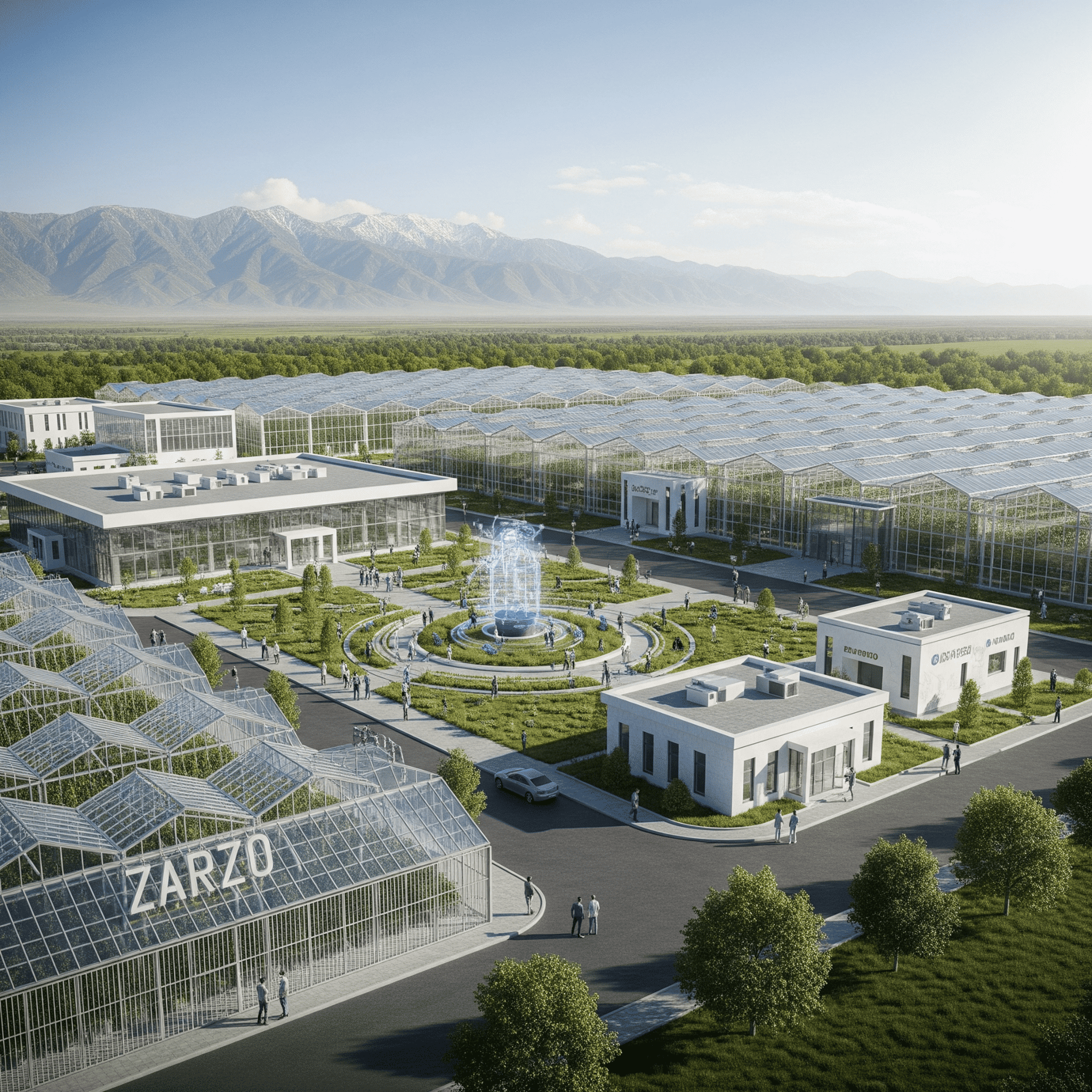
ZARZO — A platform for biotechnology, agroinnovation, and social mission for sustainable agriculture
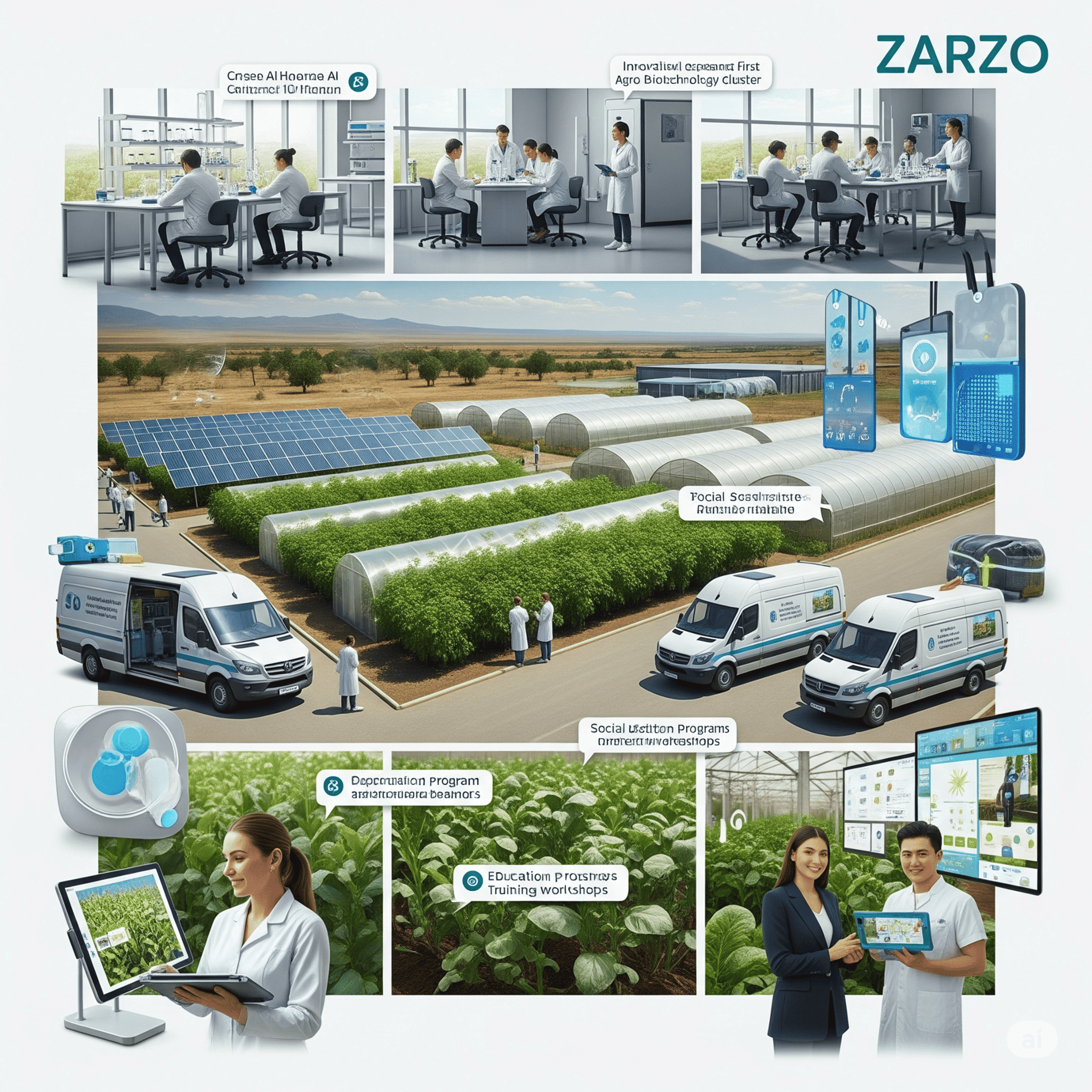
INTRODUCTION: ZARZO – A New Era for the Agricultural Sector of Tajikistan and Central Asia
ZARZO is more than just a project; it's an innovative digital ecosystem and the region's first cluster of agrobiotechnology, social innovation, and export potential.
1. Context and challenges of the sector
Tajikistan, like most Central Asian countries, faces a number of pressing challenges in agriculture: low productivity, dependence on imported planting material, a lack of modern technology, outdated educational practices, and a lack of sustainable solutions for youth, women, and small farmers. Nearly 90% of planting material for vegetables, fruit crops, and especially potatoes is imported—often of poor quality, lacking adequate virus purity, and lacking adaptation to the local climate. This not only limits yield potential but also makes national food security vulnerable to external and climate-related risks.
Modern agriculture is unthinkable without sustainable digital solutions, precision farming technologies, and effective tools for knowledge and resource sharing. Farmers and rural entrepreneurs need not only access to the best planting materials but also modern services: digital monitoring, agricultural consulting, and integrated support at all stages of production and market entry.
2. ZARZO — Tajikistan's first integrated bioplatform
The ZARZO project spans 10 hectares, encompassing key elements of agricultural production—from research laboratories and greenhouses to mobile services and digital platforms—and is based on a unique combination of modern technologies, leading educational programs, social inclusivity, and environmental responsibility.
ZARZO's main directions and unique functions:
Biotechnology and in vitro:
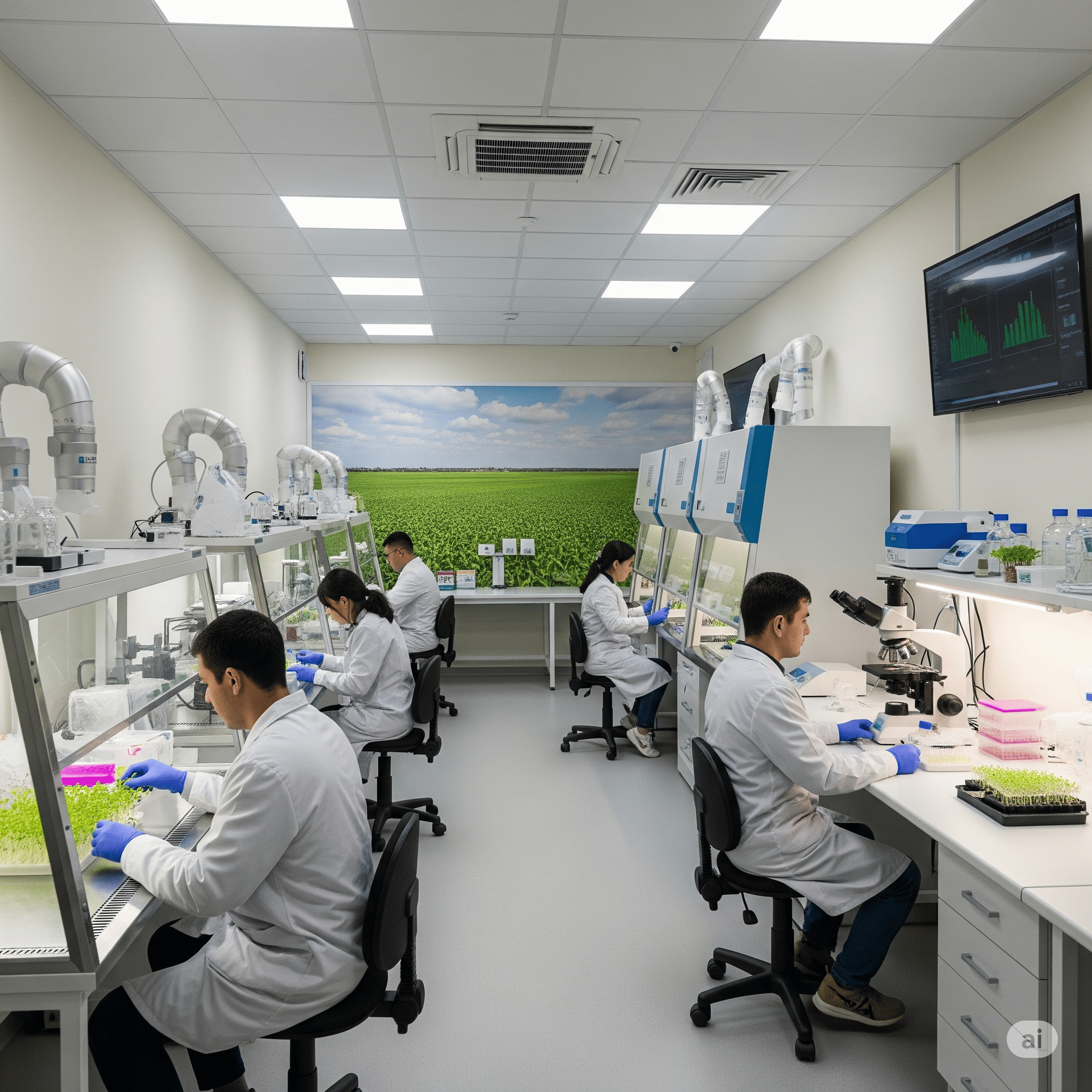
The creation of the country's first laboratory for microclonal (in vitro) propagation and plant improvement is the foundation for the production of virus-free, certified potato seedlings and mini-tubers for the domestic and export markets. This includes sterile conditions, specialized nutrient media, and strict quality control to ensure the high purity and viability of the planting material.
Soil and Agricultural Services Laboratory:
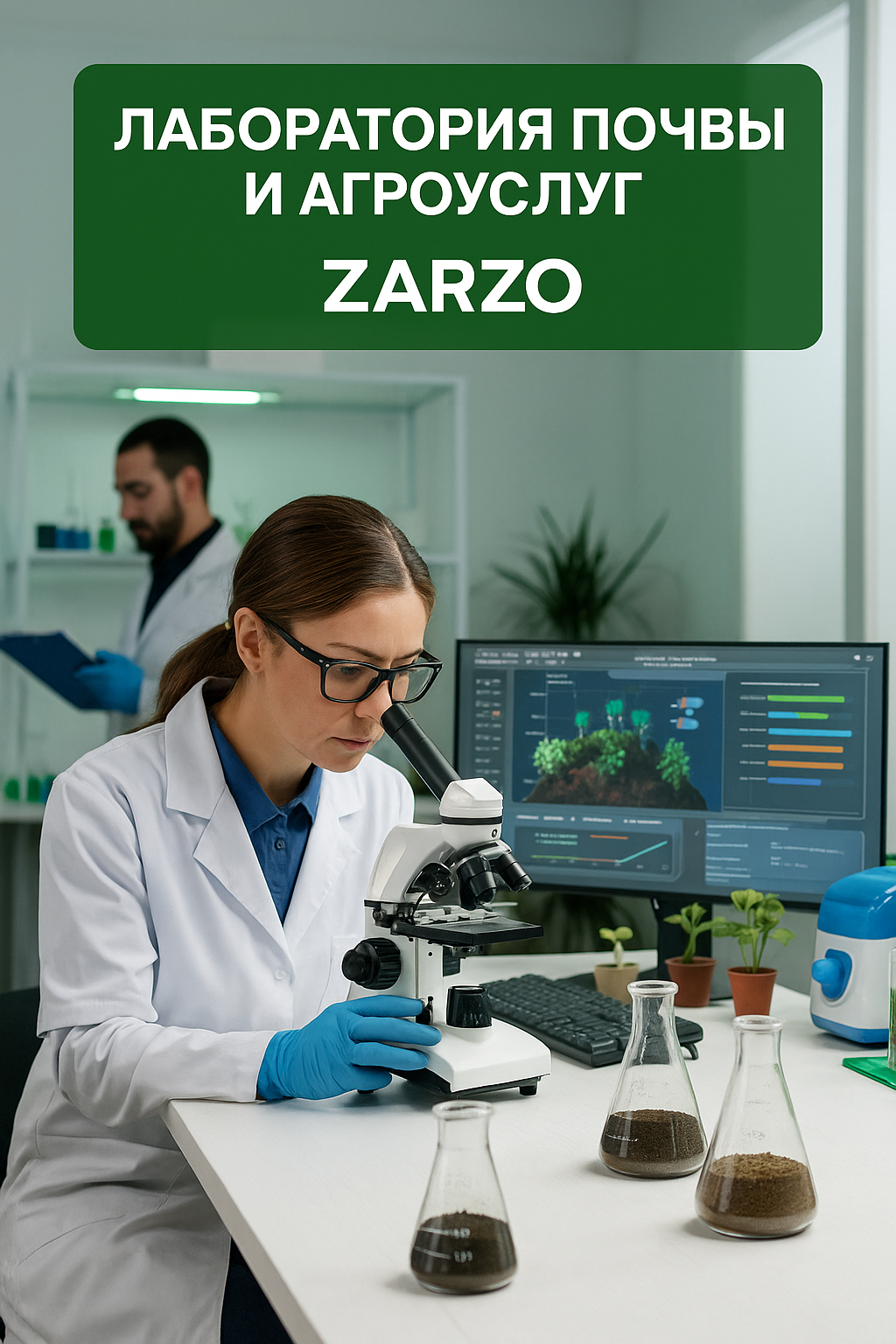
ZARZO includes a cutting-edge soil analysis and agricultural services laboratory. It provides comprehensive diagnostics of the physical, chemical, and biological parameters of the soil for each client. Based on the analysis, customized recommendations are provided on varieties, fertilizers, fertility restoration, biopreparations, and agricultural technologies. Particular attention is paid to agro-ecological support, on-site services, field monitoring, and the integration of laboratory data into a digital farm management system.
Elite potato seed module (SE1–SE2–E):
A complete, comprehensive, international standard: from in vitro and minitubers to Super-Super-Elite (SE1), Super-Elite (SE2), and Elite (E)—more than 6,300 tons of certified elite potato seeds annually, reaching markets in the CIS and Central Asia. This module includes strict control of viral purity and varietal identity at every stage.
Modern greenhouse complexes:
4,000 m² of high-tech greenhouses with digital climate control, IoT sensors, energy-efficient and resource-saving solutions (drip irrigation, aeroponics, hydroponics, container growing), as well as training and practical areas. These greenhouses provide optimal conditions for plant growth and showcase cutting-edge agricultural technologies.
Intensive nursery:
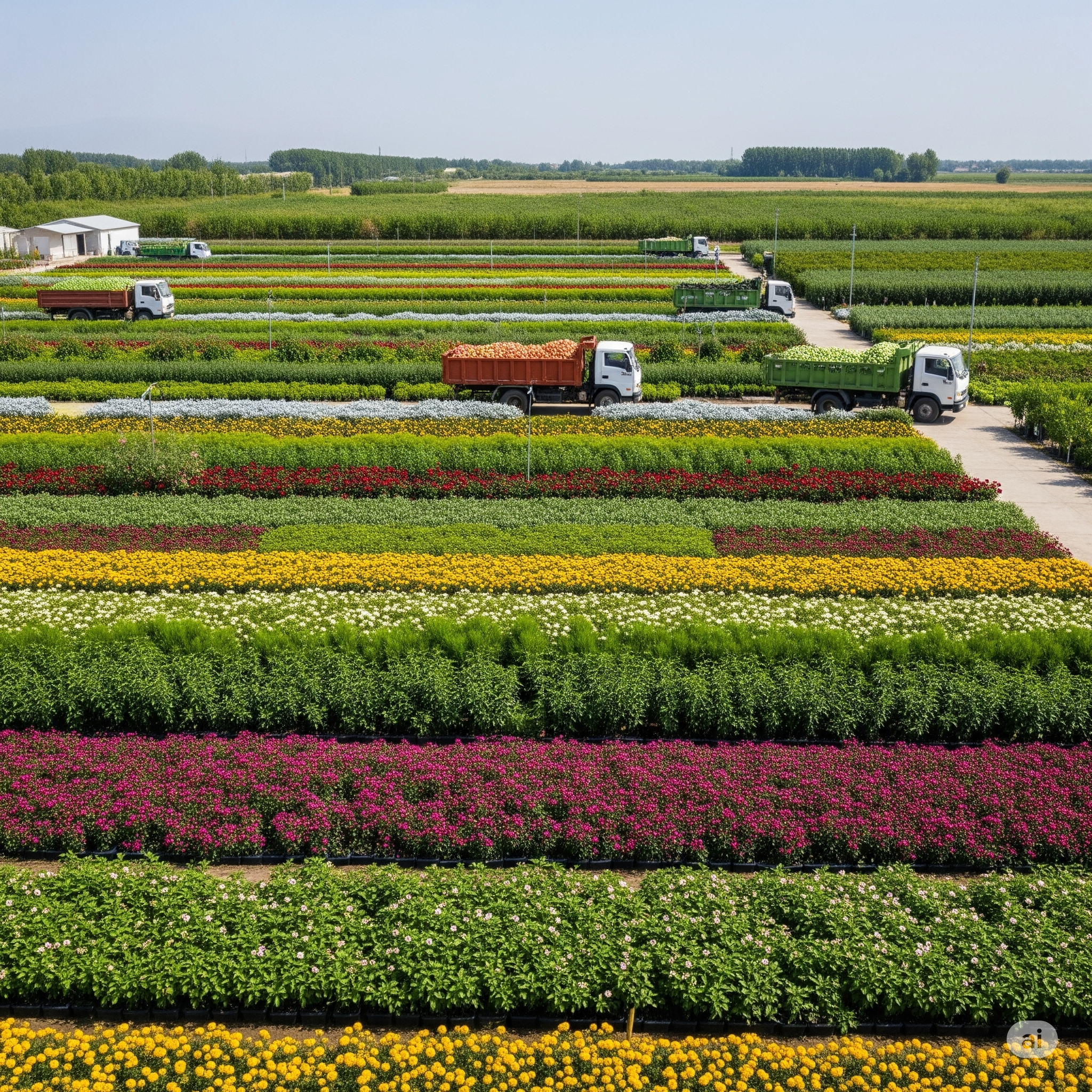
The 10-hectare facility is used for the mass cultivation of fruit, berry, and ornamental crops, the adaptation of new varieties, stress testing, and the development of an in-house nursery stock and agricultural export program. The nursery serves as a platform for research and demonstration of plants resistant to the local climate.
The ZARZO project plans to establish a specialized nursery and grafting laboratory for the production of super-intensive and intensive varietal fruit seedlings. This significantly expands the range of planting material available and improves the efficiency of agricultural production through high-yielding intensive orchards.
Goals:
• Production of certified grafted seedlings with improved characteristics (early maturity, yield, resistance to diseases and climatic stress).
• Promoting the development of modern horticulture using highly intensive and super-intensive technologies.
• Engaging local communities and farms in sustainable agriculture using advanced agricultural technologies.
Technical details: • Nursery area: 10 hectares of the 15 hectare project area.
• Production capacity: up to 1,000,000 grafted intensive and super-intensive seedlings per year.
• Main crops: sweet cherry, apple, pear, plum, apricot.
• Grafting technologies: budding, copulation, side grafting, winter grafting under sterile conditions.
Infrastructure: • Grafting laboratory (clean area and sterile boxes) for mass grafting.
• Container area for acclimatization and further growth of seedlings after grafting.
• Open-field plots with a drip irrigation system and protective nets for hardening off plants before sale. Social impact and sustainability:
• Employment of up to 20 permanent and seasonal workers.
• Training local farmers in intensive gardening technologies and grafting techniques.
• Increasing local community incomes through the sale of high-quality planting material. Environmental benefits:
• Resilient and highly productive seedlings minimize the use of chemical pesticides.
• Increasing land productivity without expanding cropland.
Production shops and engineering block:
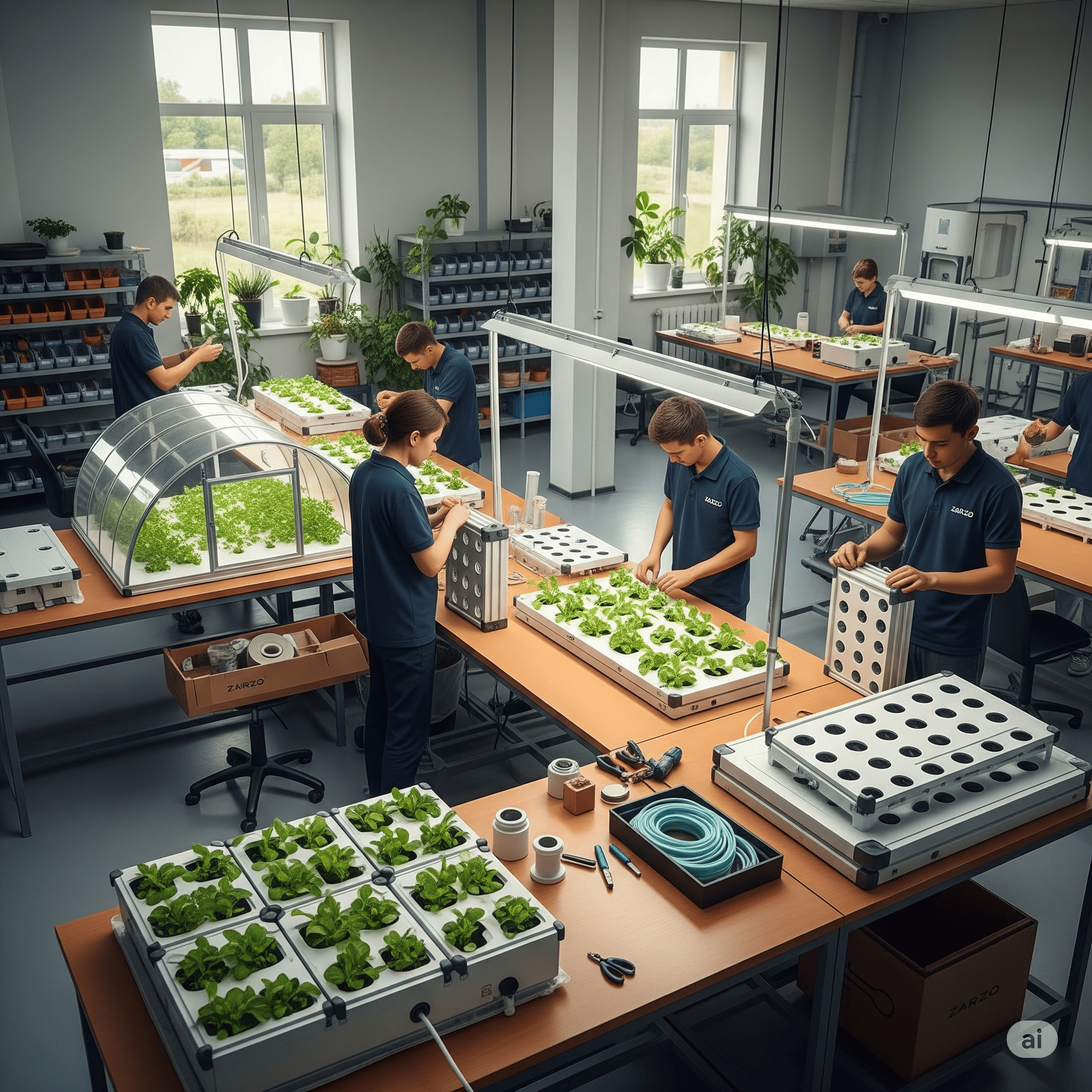
ZARZO is the only cluster in the region that not only uses but also manufactures hydroponics equipment, including educational mini-kits for agricultural classes in rural schools, greenhouse modules for farmers, and drip tapes. This contributes to the development of local agricultural engineering and reduces dependence on imported equipment.
Extrusion production:
Drip tape
HDPE hoses
PVC/HDPE pipes
Polyethylene film for greenhouses
Mulch film
Textile and polymer products:
Shade Nets / Shade nets for plants
Biodegradable pots
Seedling trays (injection molding)
Metal structures:
Greenhouse arches (metal bending line)
Frames, mini-greenhouses, farm tunnels
Agrochemicals and biological products:
Biofertilizers / Biocontrol Lab
Substrate mixing & sterilization plant
3. Digital Transformation of the Agricultural Sector with ZARZO
ZARZO develops innovative digital solutions across the country's agricultural sector to improve efficiency, knowledge accessibility, and communication.
3.1. ZARZO's own mobile app
An innovative mobile app (iOS/Android) in five languages (Tajik, Russian, English, Farsi, Uzbek) with key features:
- Personalized recommendations and AI-enabled consultations on the selection of crops, varieties, and technologies.
- Online training: access to video lessons, methods, webinars, digital textbooks, and real-life cases.
- The agrogame "AgroBusiness" is a simulation of a farming business with real-life situations and scenarios for teaching young people and schoolchildren and developing interest in rural entrepreneurship.
- Online marketplace: Buy and sell seeds, seedlings, agricultural equipment, and services, as well as quickly order agricultural services with supplier ratings.
- Instant alerts about weather risks, droughts, frosts, and pest outbreaks – thanks to integration with IoT sensors, international weather services, and an AI predictor.
- Green Passport system for each plot: planting history, fertilizer application, soil analysis, geotagging, access to export certification.
3.2. Telegram bot with artificial intelligence
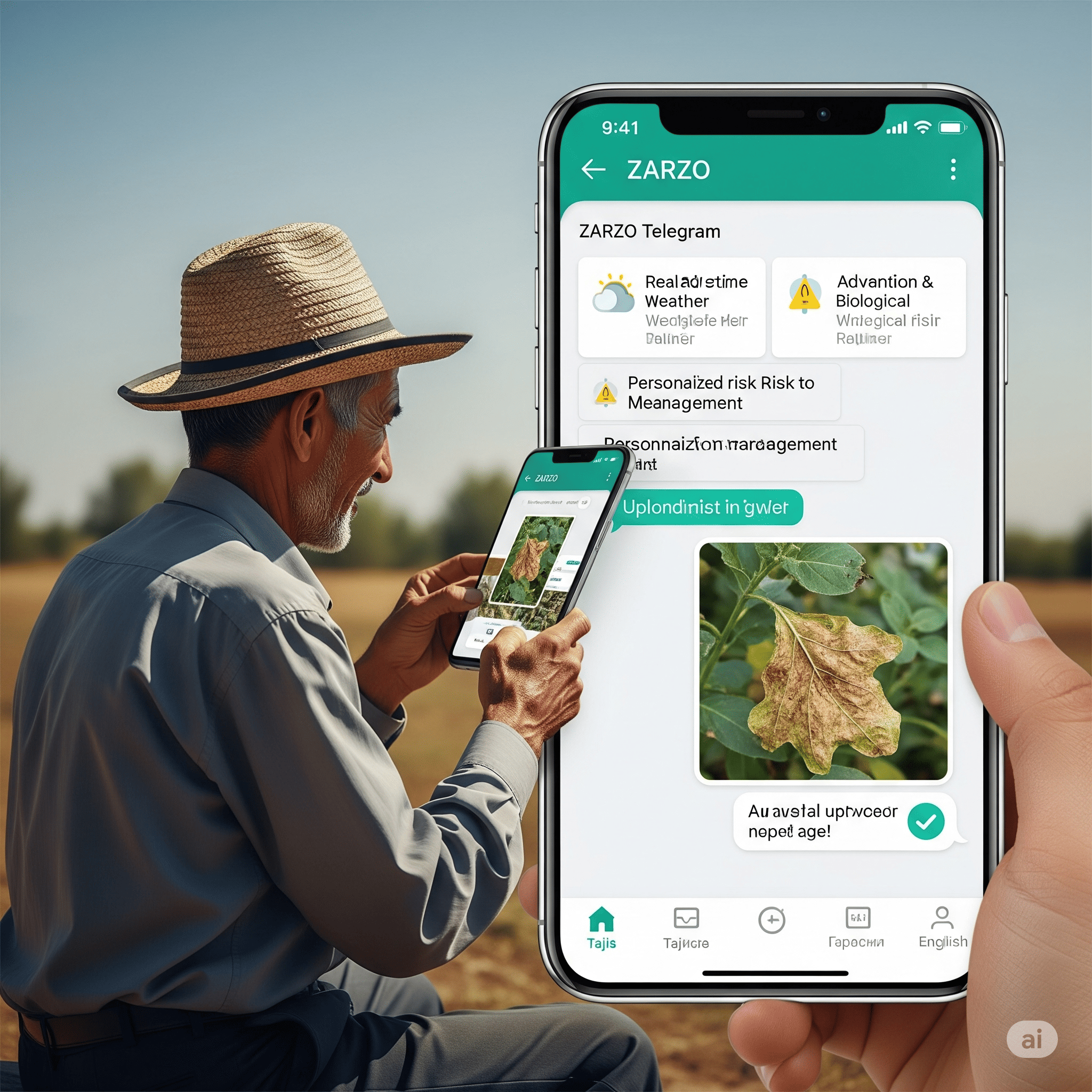
The interactive Telegram bot ZARZO is an innovative digital assistant and “agronomist in your phone.”:
- Available 24/7, supports Tajik, Russian and English languages.
- Alerts about adverse weather, biological risks and opportunities to obtain detailed information.
- Integration with weather services, automatic generation of personalized recommendations, and monitoring of recommendation implementation.
- Photographic recording, geolocation, confirmation of seedling growth, and reporting for social programs (“Sapling of Hope,” “Fruit for a Sapling”).
- AI-enabled online chat allows farmers to upload a photo of a plant, receive a disease analysis, treatment recommendations, or agricultural practices.
3.3. CRM and monitoring analytics
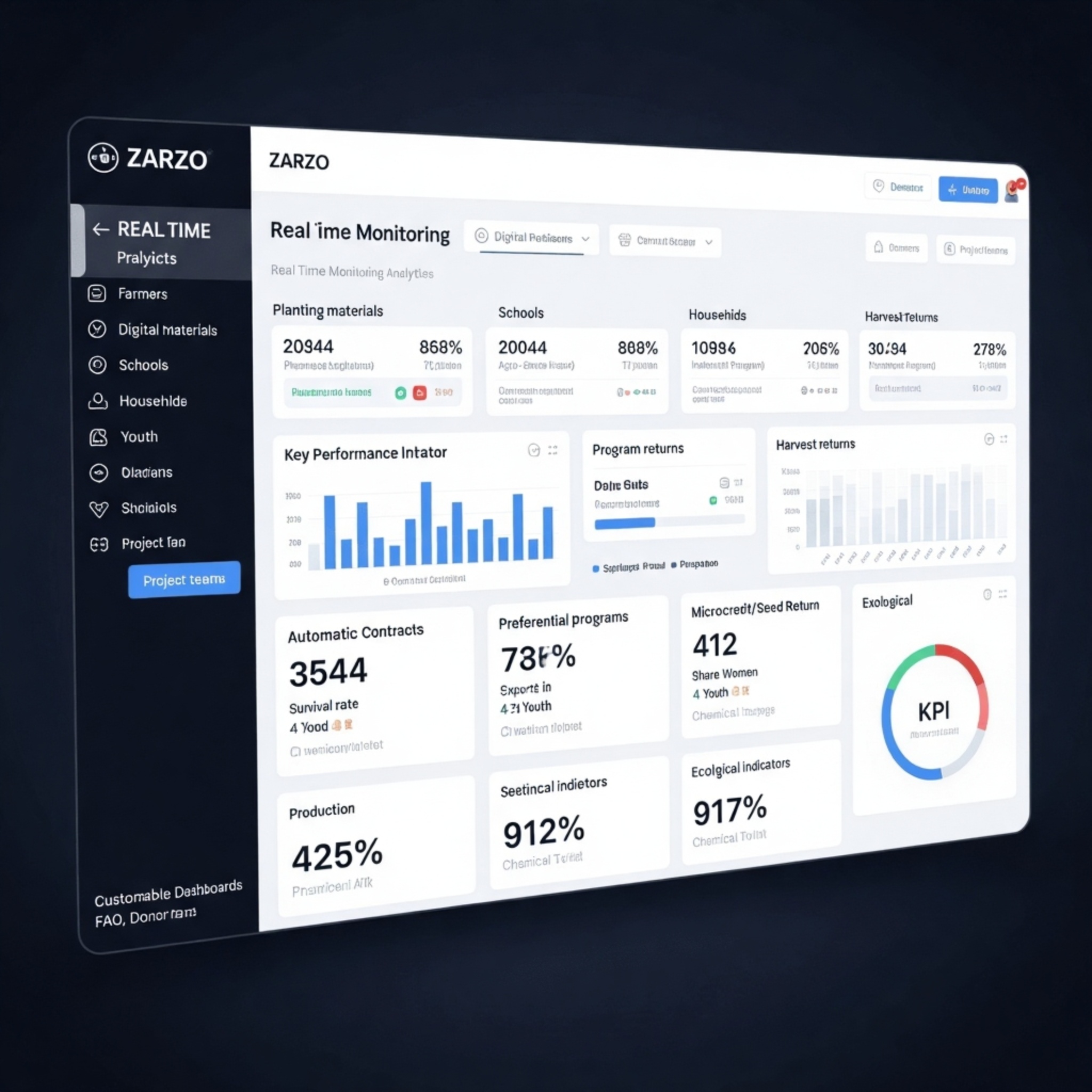
- A unified CRM platform maintains a digital history for each participant (farmers, schools, households, women, and youth): records of planting material, agricultural service history, returns under programs, and harvest returns.
- Automation of contracts, installment plans, preferential programs, control over the repayment of microloans and seeds.
- Quarterly KPI analytics – production, survival rate, export, share of women and youth, environmental indicators (water, chemistry).
- Customizable dashboards for FAO, donors, partners, and project teams.
5. Environmental and climate responsibility
- ZARZO implements a complete rejection of synthetic pesticides and herbicides, and the mass introduction of biofertilizers, humates, and mycorrhiza.
- Crop rotation, cover crops, mulching, and recirculating drip irrigation (water savings of up to 70%) are being introduced.
- Own bank of local improved varieties, biodiversity conservation program.
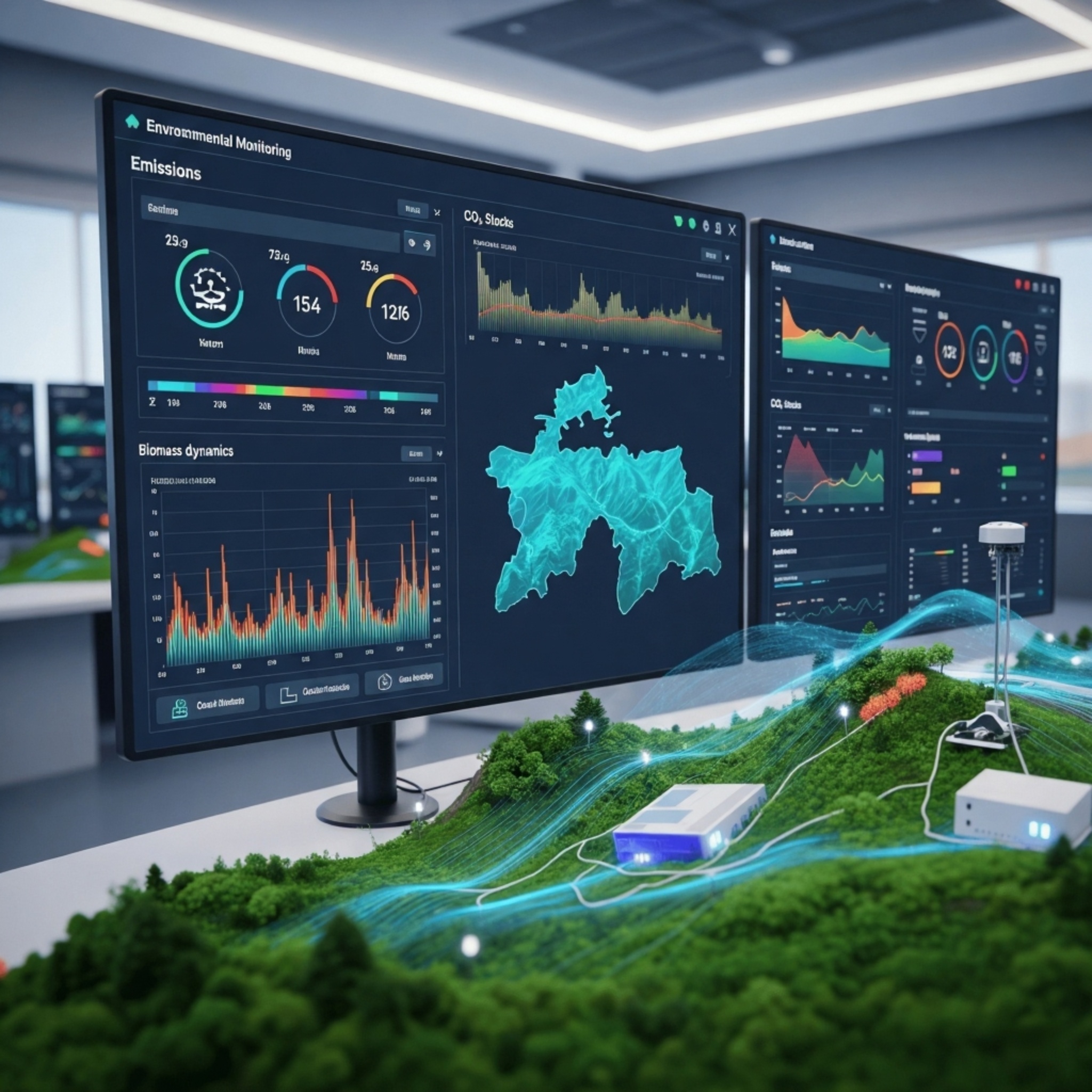
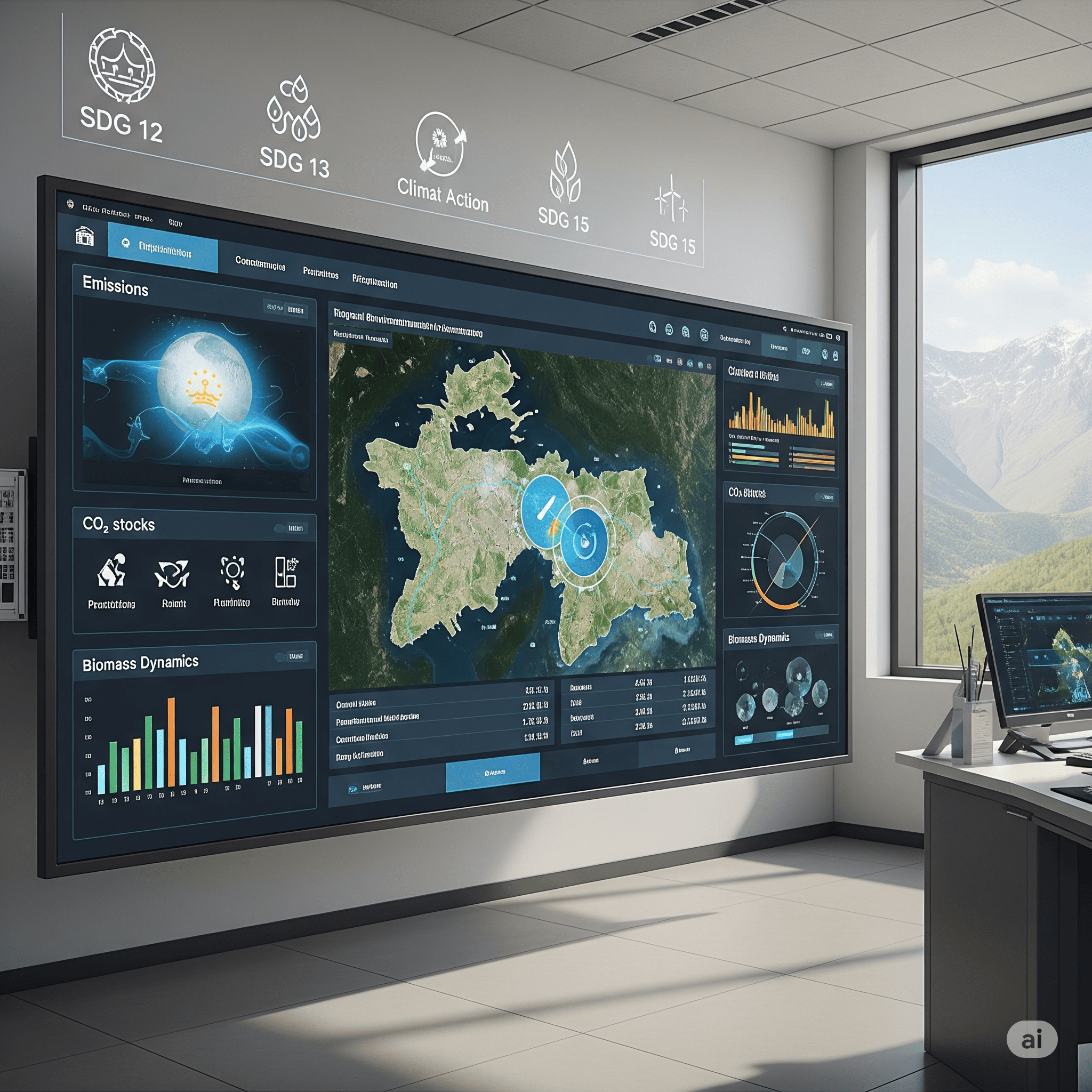
- Digital environmental monitoring system (monitoring emissions, CO₂ stocks, biomass dynamics), supporting SDGs 12, 13, 15.
6. Production facilities and agricultural engineering support
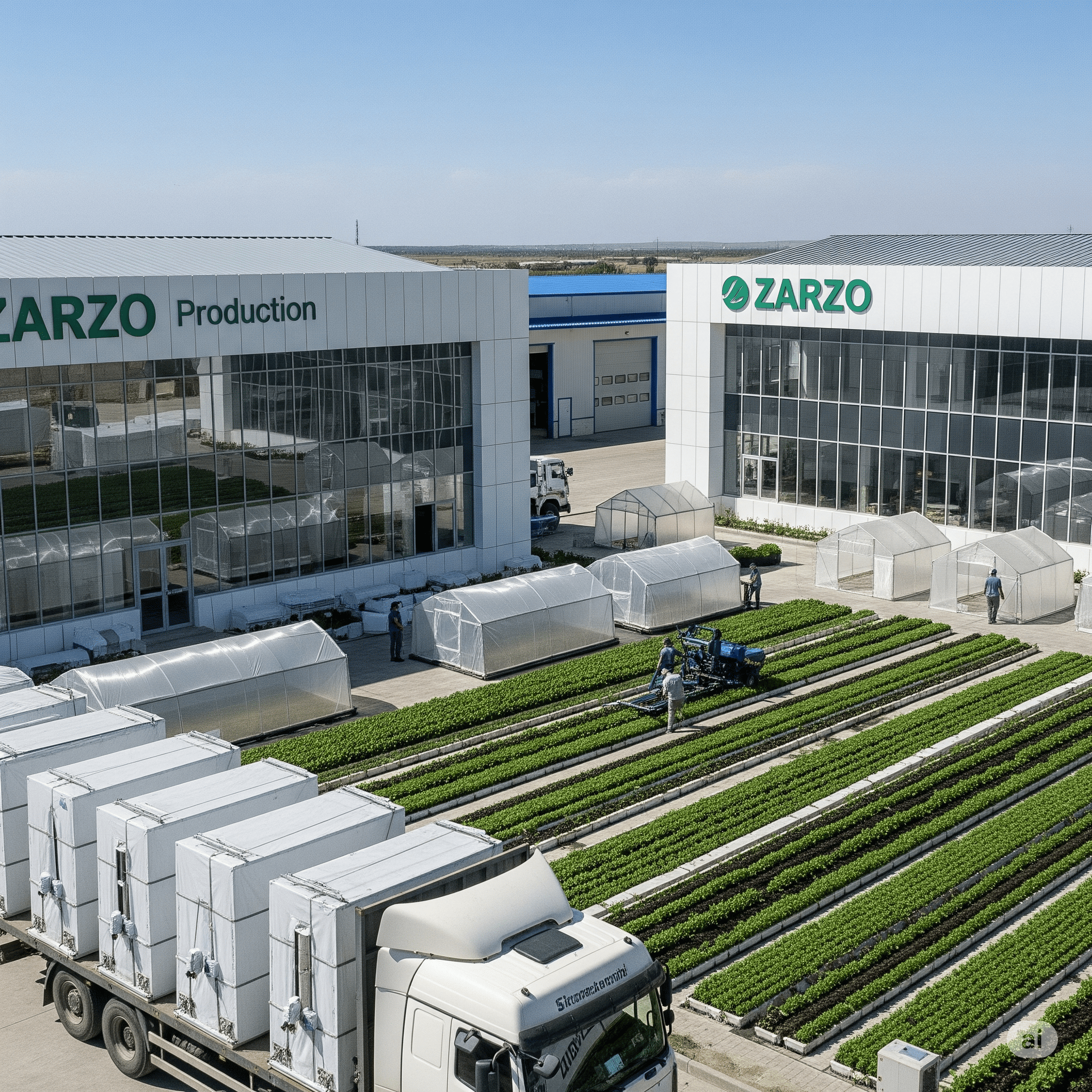
ZARZO's production facilities not only equip the complex with its own infrastructure, but also offer unique solutions to the market for agricultural classes, farmers, and home greenhouses:
- Mini hydroponic systems for schools (programmable controllers, energy-efficient LEDs, smart pumps).
- Turnkey drip irrigation kits.
- Mobile greenhouse complexes for remote regions.
- Harvest packaging and storage kits.
Production is localized: parts, assembly, and service are all done in Tajikistan, with the potential for rapid scaling and export to countries in the region.
Extrusion production:
Drip tape
HDPE hoses
PVC/HDPE pipes
Polyethylene film for greenhouses
Mulch film
Textile and polymer products:
Shade Nets / Shade nets for plants
Biodegradable pots
Seedling trays (injection molding)
Metal structures:
Greenhouse arches (metal bending line)
Frames, mini-greenhouses, farm tunnels
Agrochemicals and biological products:
Biofertilizers / Biocontrol Lab
Substrate mixing & sterilization plant
7. Partnerships and institutional support
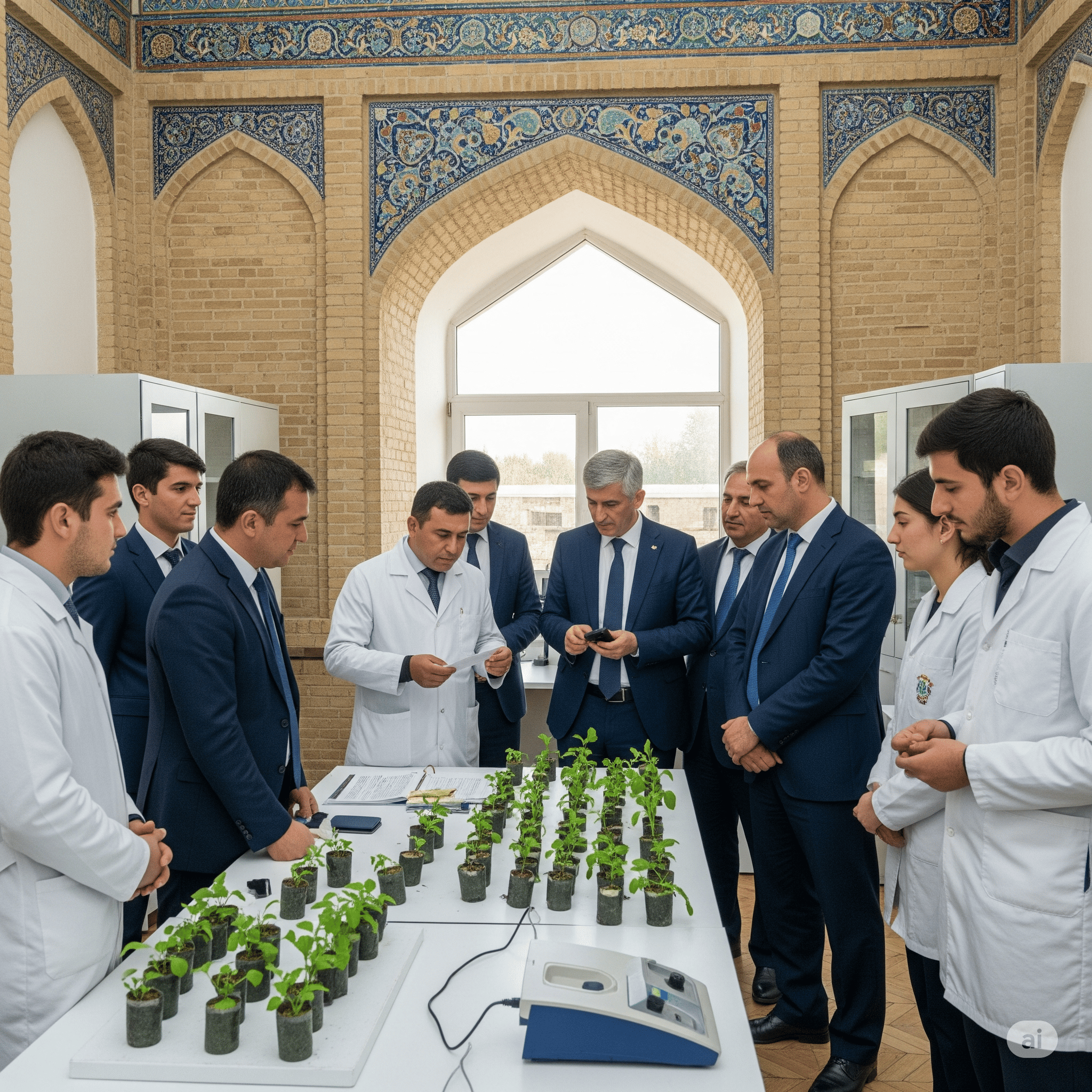
- ZARZO will build strategic alliances with the Tajik State University (TSU), the Academy of Sciences of the Republic of Tajikistan, and the Tajik Agrarian University for technology transfer, internships, implementation of innovative protocols, testing of new varieties, and joint research.
- Support from the Ministry of Agriculture of the Republic of Tatarstan, district administrations, schools, and jamoats ensures sustainable implementation of the program at all levels.
- FAO experts and international donors are involved in scaling up best practices, supporting training and certification according to FAO/EU standards..
- A channel for partnerships with private companies has been opened: logistics, packaging, transportation, and the implementation of joint export lots..
8. ZARZO – synergy of technology, people, and the market
ZARZO is not only a modernization of agricultural production but also a digital "skeleton" for the country's future agricultural economy. The project has direct impact:
- For farmers – access to the best planting material, services, knowledge, and market;
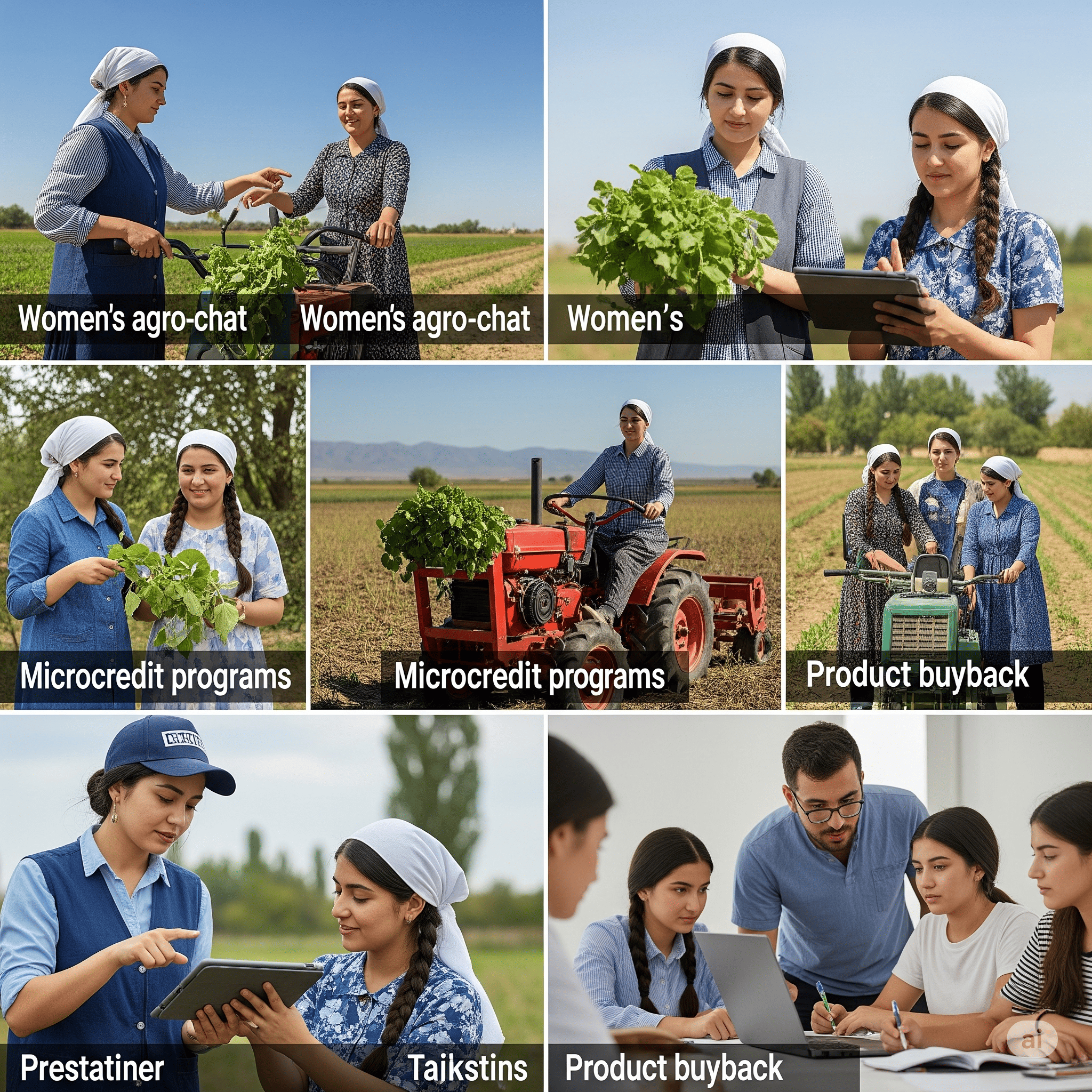
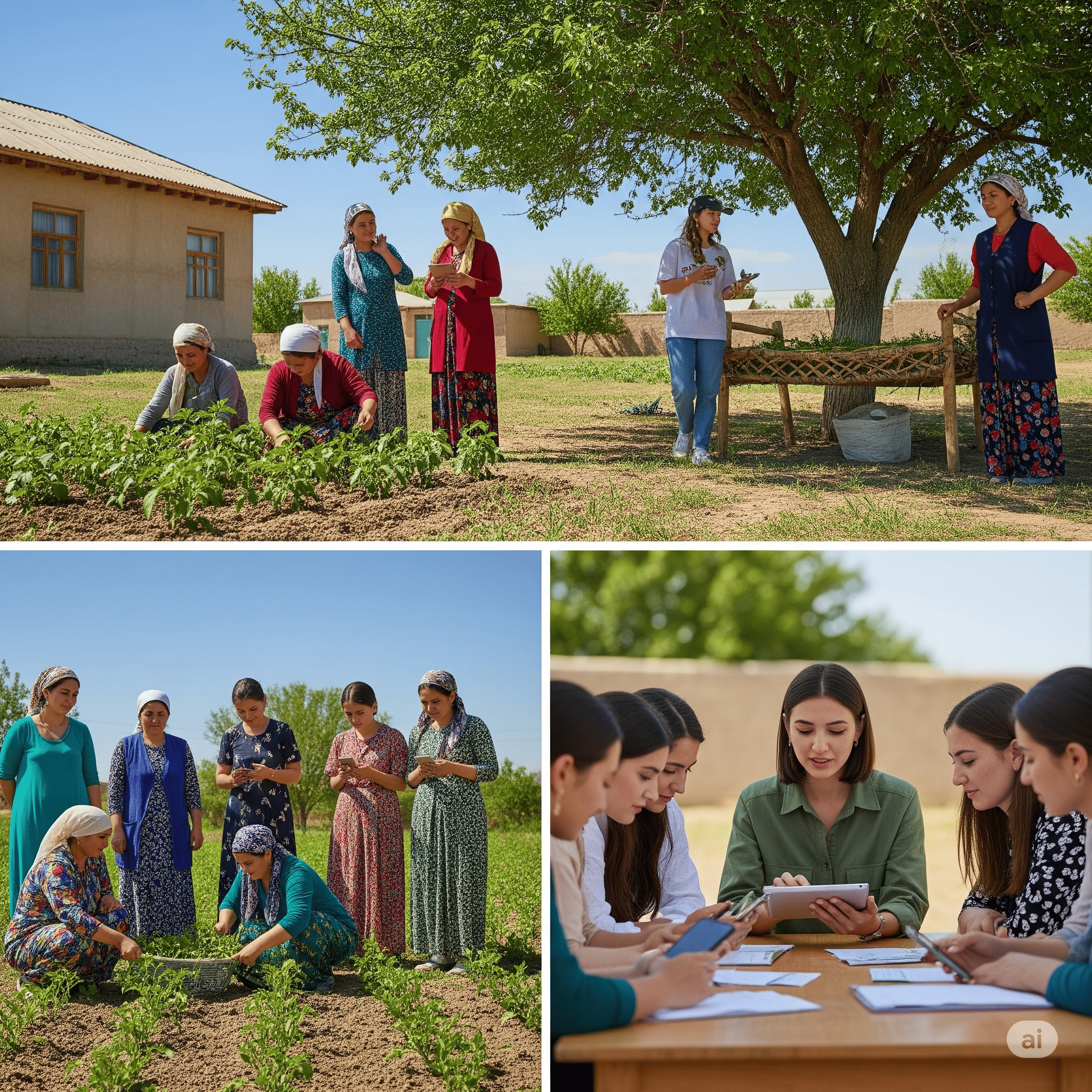
- For women and youth – economic independence, new professions, a chance to realize oneself in one’s native land;
- For schools and children – new horizons of education, digital and scientific progress, focus on modern science and sustainable development;
- For the region – strengthening export and innovation potential, reducing vulnerability to climate, political and market shocks.
ZARZO is a comprehensive transformation of Tajikistan's entire agricultural sector, a step toward the country's sovereignty, sustainability, and global competitiveness. Investments in this project are a contribution to a green, digital, equitable, and prosperous future for Central Asia.
- In vitro laboratory and soil, greenhouse innovations
- Module for certified production of elite potato seeds (SE1, SE2, E) according to FAO/EU standards
- Digital platform, marketplace, social and educational programs
- Import substitution of intensive and super-intensive potato seedlings and seeds (up to 100%)
- Supporting national sustainable agriculture programs
- Implementation of the priorities of the FAO-Tajikistan Cooperation Framework (RPS)
- Contribution to the implementation of the Agricultural Sector Development Program until 2030
Project Executive Summary
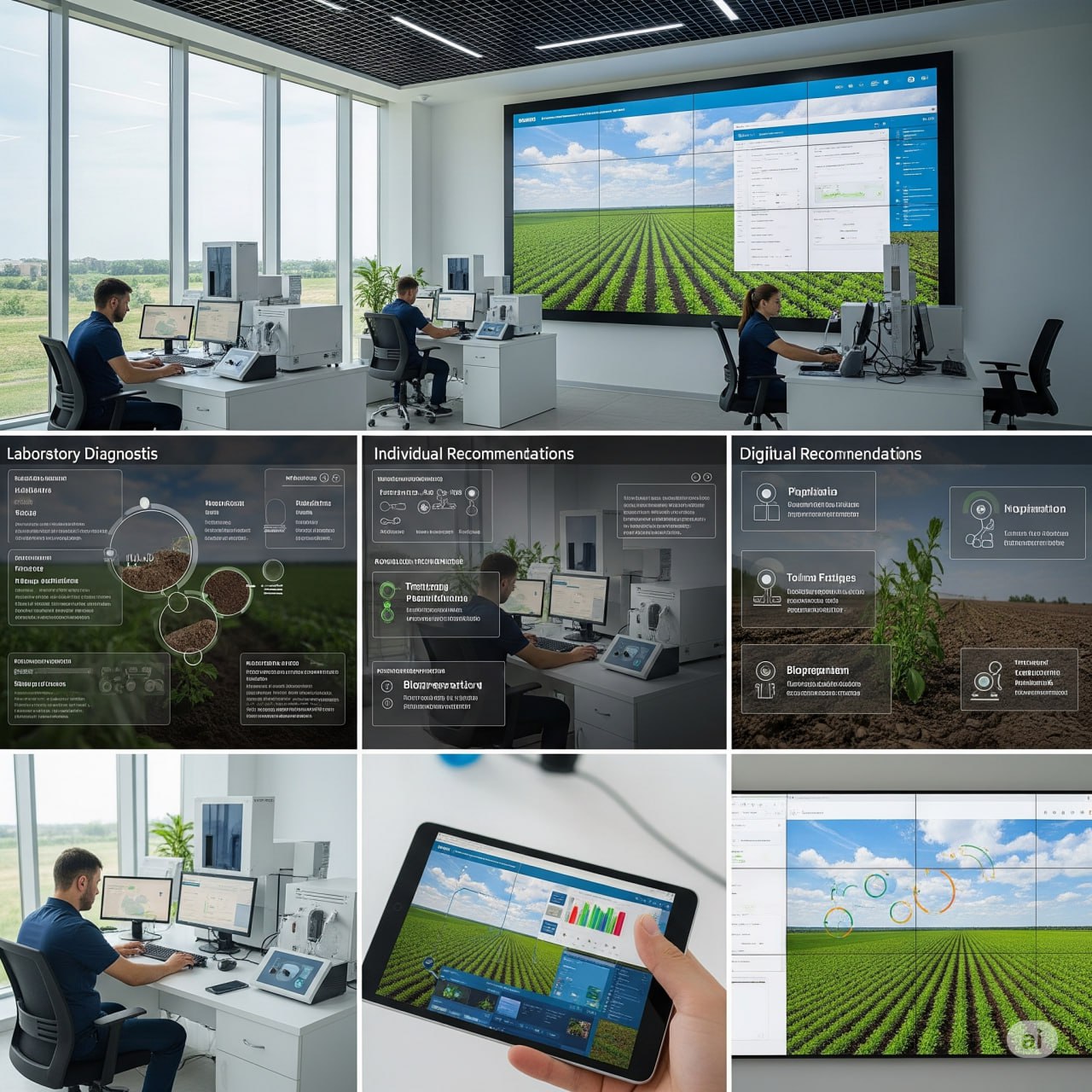
The ZARZO project is Tajikistan's first integrated sustainable agriculture platform, combining modern biotechnology (in vitro, hydroponics, and aeroponics), a module for certified production of elite potato seeds (SE1, SE2, and E) according to FAO/EU standards, a social mission, and digital solutions (a mobile app and Telegram bot in 5 languages, CRM, online training, and an agromarketplace).
Based on 10 hectares in the Rudaki district, the project includes:
- construction and launch of an in vitro laboratory (400 m²), a greenhouse complex (4,000 m²), production facilities and housing for employees;
- development of a full cycle of elite potato seed production: from in vitro and mini-tubers to Super-super-elite (SE1), Super-elite (SE2) and Elite (E) with laboratory control and international certification;
- production of virus-free seedlings, mini-potato tubers, and agricultural kits for schools and households;
- implementation of social programs: “Sapling of Hope”, “Fruit for a Sapling”, agricultural classes and agricultural schools, microloans for women and youth, mentoring and educational modules;
- creation of a hybrid sustainable energy supply system (40 kW solar station + batteries);
- Launch of digital infrastructure: CRM, Telegram bot, online training, marketplace for agricultural services and products.
ZARZO is fully compliant with FAO priorities and SDGs 2, 4, 5, 8, 12, 13, 15, integrates advanced monitoring mechanisms, digital control and ensures high environmental sustainability.
SECTION 1 - RELEVANCE

1.1. Coherence and strategic alignment
1.1.1. Consistency with the Strategic Framework Program of the Republic of Tajikistan (SFRT)
The ZARZO project is fully consistent with the key priorities of the Tatarstan Production Sharing Agreement:
- Development of sustainable and competitive agriculture and food security;
- Implementation of innovations, modern biotechnologies and digital solutions in the agro-industrial complex;
- Expanding economic opportunities for women and youth in rural areas;
- Promoting environmentally friendly production and conservation of natural resources.
1.1.2. Alignment with the Framework Programme for Cooperation (FPC)
ZARZO is organically integrated into the FAO-Tajikistan RPF Strategy 2023–2027:
- Priority 1: Innovation and digitalization in agriculture (in vitro, Telegram bot, application, CRM);
- Priority 2: Access to high-quality planting material and knowledge (creation of a module for certified elite seed production of potatoes SE1, SE2, E);
- Priority 3: Greening and restoration of ecosystems (aeroponic and biotechnological solutions).
1.1.2a. Integration with the Hand-in-Hand (HiH) initiative
The ZARZO project was included in the national HiH investment pool based on the analysis of FAO geospatial data on hunger and poverty (SDG-2.1.2, SDG-2.3.1).
- The GHI 2023 Hunger Index map classifies the Rudaki and Varzob districts as “moderately hungry” (>15% of the population undernourished).
- Priority Landscape: The 15-km zone around the ZARZO centre covers 42,000 smallholder farmers (≤2ha), of which 58% are women.
The project meets the HiH “High Impact, High SDG value” criteria, which allows it to apply for the HiH Acceleration Facility and IFAD-FAO blended financing.
1.1.3. Expected results
- Launch of the first in vitro laboratory in the Republic of Tatarstan, a greenhouse complex and an elite seed production module;
- Ensuring 100% of domestic demand for certified seedlings and tubers;
- Involvement of more than 20,000 beneficiaries (farmers, women, youth, schools);
- Contribution to 8 SDGs: 2, 4, 5, 8, 9, 12, 13, 15.
1.1.3a. Climate justification and access to climate finance
- The ZARZO project is classified as a "climate-adaptation" (GCF Category 3 - helping farmers survive droughts and extreme weather) and "low-water CSA" (i.e., agriculture that simultaneously increases yields, adapts to the climate, and reduces emissions) (GEF-7 SGP) - a grant stream of the 7th phase of the Global Environment Facility for "water-efficient climate-smart agriculture technologies".
- Baseline GHG emissions according to the EX-ACT model: -1,800 t CO₂-eq./year (due to the substitution of potato imports and the reduction of N₂O emissions).
- Adaptation effect: reduced vulnerability to drought for 210 hectares of potato crops by 2029.
- Compliance with Tajikistan’s NDC: paragraph 2.3 “Reducing dependence on food imports” and paragraph 3.1 “Implementation of CSA technologies”.
1.2. Comparative advantages
1.2.1. Powers
The project is being implemented on the basis of the registered ZARZO platform, with the right to:
- ownership of a 10-hectare land plot in the Rudaki area;
- construction of laboratories, greenhouses and seed production modules;
- production and sale of planting material, greenhouses, agricultural services and elite seeds;
- conducting educational and social programs.
The partner base includes TSU, TAU, the Academy of Sciences of the Republic of Tatarstan, letters of support from the Ministry of Agriculture, and district administrations.
1.2.2. Potential
- Technologies: Implementation of in vitro, hydro- and aeroponics, digital monitoring (Telegram bot, CRM), full cycle of elite seed production (SE1, SE2, E) with international certification.
- Team: Scientific director (in vitro, seed production), biotechnologists, agricultural experts, financial director of projects.
- Production facilities: Laboratory (400 m²), greenhouse (4,000 m²), elite seed module, production workshops.
- Market: Up to 90% of planting material in Tajikistan is imported; demand for certified seeds is growing. Strong export potential (Afghanistan, Central Asia).
1.2.3. Opportunities for action
- Localization of the full production cycle (from in vitro to elite seeds and agricultural services) within the country;
- Sustainable partnerships with government agencies, international agencies, and research institutes;
- Flexible scalability model (adaptation to regions, export);
- Support for jamoats and schools to launch social and educational programs;
- Digitalization: Telegram bot, CRM, digital reporting, digital seed passports.
1.2.4. Certified Production Module for Elite Potato Seeds (SE1, SE2, E)
A special competitive advantage of the ZARZO project is the launch of a complete certified production cycle for elite potato seeds according to international FAO and EU standards.
Module structure:
- Year 1: In vitro → mini-tubers → Super-super-elite (SE1) production on 2.5 hectares;
- Year 2: SE1 sowing → Super-elite (SE2) production on 19 hectares;
- Year 3: SE2 sowing → Elite (E) production on 150 hectares;
- Next: Annual production cycle and sale of elite seeds for the domestic market and export.
Key components:
- Separate fields with buffer zones to prevent cross-contamination;
- Laboratory diagnostics, varietal purity control, and phytosanitary status monitoring at every stage;
- A set of specialized equipment for planting, harvesting, sorting, and packaging;
- Complete digital tracking of seed lots in the CRM system;
- Annual certification and external audit (FAO/EU/CIS).
Expected results and benefits:
- Production of up to 6,300 tons of elite certified potato seeds per year;
- National and export status as the only officially certified producer of elite potatoes in Tajikistan;
- Opportunity to participate in government and international support programs, export to Central Asian countries, the CIS, and Afghanistan.
- Increased farmer confidence, domestic market development, promoting the ZARZO brand as a guarantee of quality.
1.3. Context Analysis
1.3.1. Stakeholder Engagement
ZARZO is a multi-level platform that integrates:
- Government agencies: Ministry of Agriculture of the Republic of Tatarstan, khukumats, committees on land and ecology;
- Scientific and educational institutions: Tomsk State University, Tatarstan Agrarian University, the Academy of Sciences of the Republic of Tatarstan, participating schools;
- Farmer associations and cooperatives: agrochats, mobile consultations, introduction of elite seeds;
- Women's and youth groups: focus on training and involvement in agricultural production, microloans;
- International partners and donors: FAO — sources of technical and financial support.
Communication is conducted through offline events, agricultural schools, a Telegram bot, CRM, and demonstration plots.
1.3.2. Issues to Address
- Import dependence: 90% of seedlings and tubers are imported, often of low quality, with the risk of losing their variety.
- Lack of elite domestically produced seeds: no national supplier, lack of government programs to support small farms and exporters.
- Loss of local varieties, biodiversity, and seed stock.
- Lack of agricultural education and modern technologies: no agricultural classes in schools, poorly developed one-stop services.
- Weak system of integrated agricultural services and digital monitoring.
1.3.3. Partnerships
- Science: Tatarstan Academy of Sciences, Tomsk State University, TAU, specialized research institutes — expertise and implementation of new technologies, certification.
- Education: pilot schools, agricultural classes, internships for youth and women.
- Local authorities: support, land allocation, approval of new modules.
- Financial partners: negotiations with the FAO International Fund.
- Civil society: women's councils, initiative groups, NGOs.
1.3.4. Knowledge Management and Communications
- Digital knowledge platform: online courses, manuals, webinars, newsletters.
- ZARZO Telegram bot: agricultural reminders, photo reports, support for farmers, communication with agronomists.
- Field agricultural schools and demonstration plots: trainings and "field days".
- Mentoring: internships for youth and women within agricultural classes, transfer of skills in elite seed production.
SECTION 2 - JUSTIFICATION
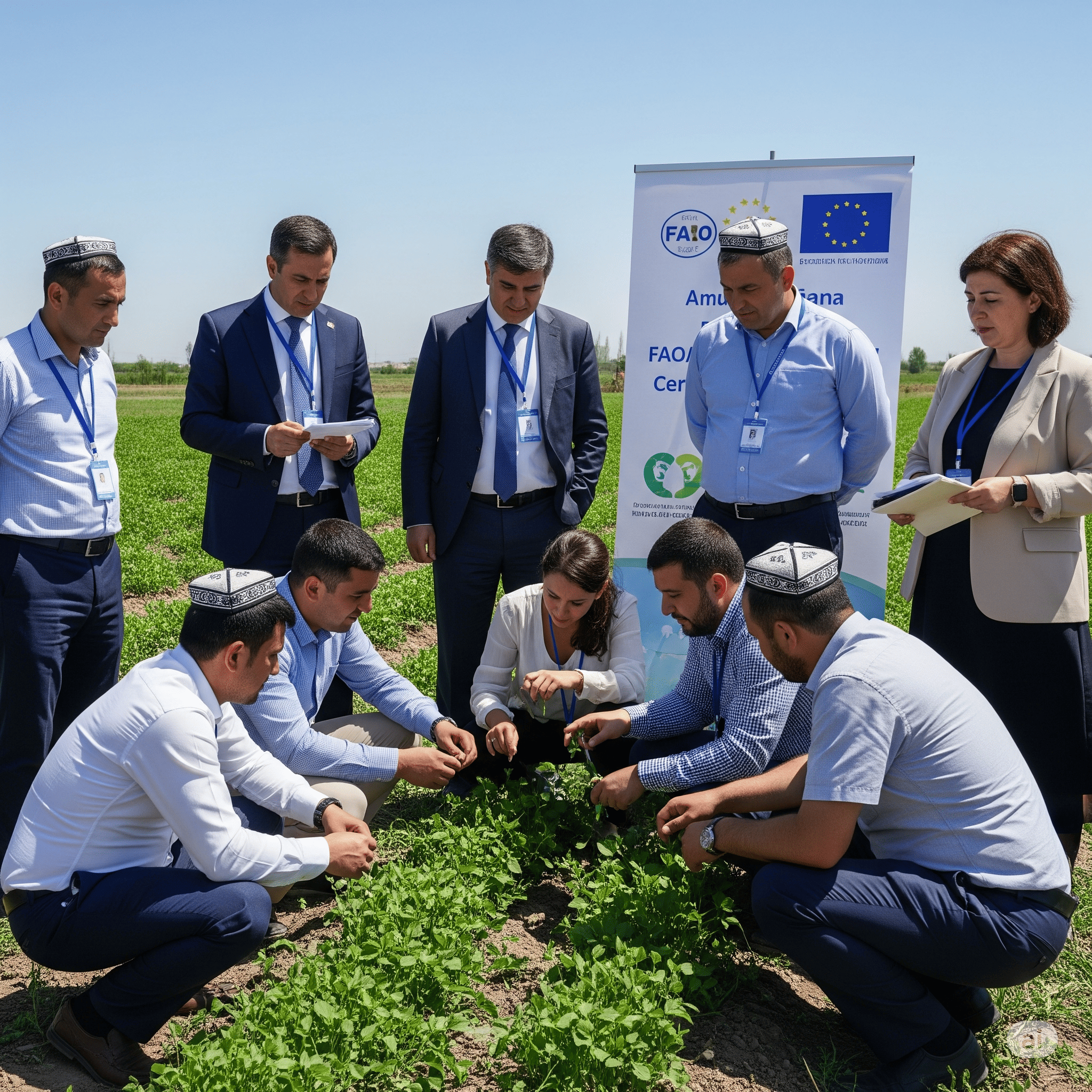
2.1. Implementation Mechanisms
2.1.1. Institutional Structure and Coordination
The ZARZO project is implemented through a flexible institutional model:
- Headquarters: ZARZO Management Team (legal entity), consisting of: CEO, Scientific Director, Operations Manager, CFO, Social Programs Coordinator, Head of the Elite Seed Production Module
-
Technical Partners:
- Tajik State University (TSU): scientific support, personnel training;
- Academy of Sciences of the Republic of Tatarstan: expertise and certification, methods for in vitro and elite seed production;
- Ministry of Agriculture of the Republic of Tatarstan: strategic coordination, promotion of certification;
- Schools and jamoats: implementation of agro-classes and social programs.
-
Coordination mechanisms:
- Interdepartmental working group (ZARZO, Ministry of Agriculture, Tomsk State University, Taurus Agricultural University, Academy of Sciences, research institutes, donors);
- Online monitoring dashboard for FAO, partners, and donors;
- Telegram group and CRM for all participants.
2.1.2. Government Contribution
- Allocation of a 10-hectare plot in the Rūdakū district (documented);
- Assistance in certification of in vitro, greenhouse, and elite planting material (SE1, SE2, E);
- Coordination with administrations and schools, support for agricultural schools and social programs;
- Inclusion of ZARZO components (including the elite module) in state agricultural and environmental development programs.
2.1.3. Contributions from Resource Partners
-
FAO:
- Expert and technical support for in vitro, monitoring, certification, and elite seed production (SE1, SE2, E);
- Support for social and environmental initiatives;
- Integration into FAO regional/global initiatives.
-
Private partners and co-investors:
- Partner companies — logistics, transportation, packaging, distribution.
2.2. Statistics
Planting Material Market:
- Up to 90% of seedlings, mini-tubers, and elite seeds are imported from the CIS countries, Turkey, Iran, and China;
- In Tajikistan, annual production of approximately 1.3 million tons requires approximately 200,000 tons of seed. The main demand is for generations E-R1-R3, while a significant proportion of late-generation R4-R7 seeds are imported and are often inferior in quality, which increases foreign exchange costs and reduces yields;
- The potential market for domestic replacement of imported tubers is over 42,000 tons/year (Ministry of Agriculture of the Republic of Tajikistan).
Agricultural education market:
- >Rural schools do not have agricultural classes or specialized environmental education;
- Only 3% of rural students receive practical agricultural skills (Ministry of Education of the Republic of Tatarstan, 2023);
- There is high demand for agricultural schools and kits from teachers and parents.
Socioeconomic background:
- >27% of the population of the Republic of Tajikistan lives below the poverty line (World Bank, 2023);
- Rural youth unemployment is >30%;
- Only 12% of women have access to credit and resources for housekeeping.
ZARZO's Potential:
- Up to 100% of the domestic potato seedling and seed market could be replaced by ZARZO products within 5 years;
- Target audience: 20,000+ beneficiaries (farmers, women, youth, schools, cooperatives).
2.3. Information Technology
ZARZO Telegram Bot:
- Online consultations, agricultural reminders, photo reports, monitoring beneficiaries of social programs and elite seed production;
- Tree/sapling status tracking, built-in forms, agricultural school reports;
- Languages: Tajik, Russian, English.
CRM system:
- Accounting for all participants, monitoring the life cycle of seedlings, tubers, elite seeds (SE1-E), managing installments, and analytics;
- Automated reports, progress visualization.
Educational platform:
- Online courses, webinars, e-learning for farmers and agricultural schools;
- Integration with a mobile app and national platforms.
Geographic Information Technologies (GIS):
- Mapping of plots and fields, GPS referencing, visualization of green areas and greenhouses.
Data integration and openness:
- Direct integration with FAO and government platforms;
- Verification mechanisms through photos and independent audits.
2.4. Risk Management
2.4.1. Potential Project Risks
| Risk | Possible consequences | Reduction measures |
|---|---|---|
| Delay in launching laboratory/greenhouse | Delay in schedule | Clear step-by-step planning, agreements with sanctions |
| Shortage of personnel (in vitro, elite seed production) | Decrease in quality and volume | Training at TSU/TAU, research institutes, consultants from the CIS/Turkey and Iran, experience exchange |
| Supply disruptions/increasing equipment costs | Cost increases/delays | Localization of procurement, alternative suppliers, budget reserves |
| Non-repayment of installment payments for social programs | Losses, loss of confidence | Telegram monitoring, agro-groups, pre-selection |
| Low survival rate of seedlings/seeds | Loss of effect | Certified materials, Telegram monitoring, agricultural support, warranty replacement |
| Risks for the Elite Seed Module | Failure to achieve FAO/EU standards, diseases, certification | Buffer zones, phytosanitary control, laboratory testing, audits, equipment reserves, certification for each cycle |
| Inflation, rising prices | Price increase | Spending buffer, 10-15% reserve |
2.4.2. Environmental and social risks
| Risk | Probability | Elimination measures |
|---|---|---|
| Laboratory waste contamination | Low | Disposal protocols |
| Use of plastic/packaging | Average | Biodegradable materials, local production |
| Displacement of local varieties | Low | "Local Variety Bank", work with local genetics |
| Unequal access (gender/region) | Average | Quotas for women/youth, mobile agricultural schools |
2.5. Monitoring, performance evaluation and reporting
2.5.1. Organization of monitoring
- Telegram bot: photo recording of growth stages, GPS, reminders, questionnaires
- CRM system: accounting for all participants, finances, and the product life cycle
- Field teams: on-site inspections, agricultural schools, verification of results
2.5.2. Performance evaluation
- KPIs: volume of in vitro and elite seeds (SE1, SE2, E), survival rate, reach of families/schools/women/youth, returns under programs, increase in exports, decrease in imports
- Methods: annual surveys, audits (internal and external), SDG Impact Index
- Responsible: ZARZO Evaluation Department + external auditor (in agreement with FAO)
2.5.3. Reporting
- Internal: Monthly CRM and bot data reports
- External: quarterly reports to FAO/donors with graphs, photos, and maps
- Public: annual public report, infographics, online dashboard
SECTION 3 - SUSTAINABILITY
3.1. Capacity development
The ZARZO project builds sustainable institutional, human, and innovative capacity for agribiotechnology, agricultural education, seed production, and digital agricultural services across the country.
1. Development of human potential
Training of personnel for the in vitro laboratory, greenhouse complex, and elite seed module:
- Basic training at TSU, TAU, and the Tatarstan Academy of Sciences, in-house training;
- Internships and exchange of experience with foreign laboratories (Iran, Türkiye, CIS, China, EU);
- Qualification according to international standards (ISO, GLOBALG.A.P, FAO/EU for seed production);
- Training for agricultural consultants and field teams (Field Team ZARZO): agricultural services, agricultural audits, biopreparations, drip irrigation;
- Webinars and online courses for farmers and families through an educational platform and Telegram bot;
- Practical agricultural schools and demonstrations at the greenhouse complex and fields of the elite module.
2. Institutional and local development
School agro-classes (pilot in 20+ schools):
- Equipment sets, teaching materials;
- Career guidance, creation of "green patrols," training of teachers and local coordinators.
Support for district centers and jamoats:
- Donation of greenhouses and training kits, and the launch of the "Sapling of Hope" and "Fruit for a Sapling" projects, involving households and women.
- Training local specialists in agricultural support and services for the care of elite crops.
Strengthening the scientific base:
- Establishment of a regional center for in vitro and elite seed production based on ZARZO;
- Collaboration with research institutes and universities, conducting joint research, testing, conferences, and involving undergraduate and graduate students in projects.
3.2. Ensuring decent work in rural areas
ZARZO creates new forms of employment and entrepreneurship, with a focus on women, youth, and low-income families, creating a "migration-free" economy adapted to seasonality and the agricultural calendar.
1. New jobs by area
| Sector | Examples of workplaces | Peculiarities |
|---|---|---|
| in vitro laboratory | biotechnologists, laboratory assistants | Training, long-term contracts |
| Elite Seed Module | agronomists, inspectors, equipment operators | Internal certification, preparation for audit |
| Greenhouse and production | greenhouse growers, assemblers | Priority is given to women and youth |
| Agricultural services | mobile teams, installers | “Field Team”, seasonal and year-round formats |
| Social and educational programs | coordinators, agricultural mentors | Incentivizes graduates and teachers |
| Digital services | moderators, CRM operators | Flexible remote work for the regions |
2. Employment and payment formats
- Permanent - laboratories, production, agricultural support;
- Seasonal/flexible — harvesting, planting, participation in social programs (for housewives and young people);
- Partial - through agro-cooperatives and family micro-business programs;
- Incentive payments – bonuses for results in Field Team and agricultural schools.
3. Microentrepreneurship and sustainable income
- Micro-installments for women (home greenhouses, growing);
- Selling surplus through ZARZO Marketplace;
- Tree and product buyback ("Sapling of Hope", "Fruit for a Sapling").
Эффект:
200 direct jobs in 2 years, 1,000+ participants with income, 60% women and youth.
3.3 Environmental sustainability
ZARZO implements environmentally friendly practices to restore soils, reduce chemical use, preserve biodiversity, and promote climate resilience.
1. Minimize chemical load
- Avoiding pesticides/herbicides in production and adaptation;
- New generation biopreparations: humates, mycorrhiza, bacteria;
- Agroecological practices: crop rotation, cover crops, mulching, localized application of organic matter.
2. Soil restoration and resource efficiency
- Minimal tillage, manual planting, drip irrigation (water savings up to 70%);
- Water recycling, soil analysis and recommendation services.
3. Biodiversity
- Bank of clones of local varieties;
- "Fruit for a Sapling" - a diversity of cultures, with an emphasis on traditional and medicinal crops;
- Diversity of trees in the "Sapling of Hope" programs.
4. Climate resilience and CO₂ offsetting
- Local greenhouses with natural lighting;
- Support of “green belts”, composting, vermiculture farms;
- Planting >50,000 trees by 2028 (CO₂ offset potential).
SDG Integration:
- SDG 12 – Responsible consumption and production
- SDG 13 – Climate Action
- SDG 15 — protection of terrestrial ecosystems
3.4. Gender equality
ZARZO's strategy is to expand economic and educational opportunities for women and girls and remove barriers to participation in the agricultural sector.
- Target: at least 40% women among beneficiaries and participants of programs.
-
Women in all components:
- work in laboratories, greenhouses, agricultural services,
- agro-classes in schools, mentoring,
- management of micro-greenhouses and agro-sets.
-
Gender priorities in social programs:
- priority inclusion of women from low-income families,
- right of repurchase, microloans, special kits for women,
- Training and support via a Telegram bot and mobile teams.
-
Domestic policy:
- at least 50% women on the team,
- career growth, training and international internships,
- Women's inclusion in digital services, online courses without restrictions.
-
Monitoring:
- Gender mainstreaming in CRM, gender audit of social programs, consultations with FAO on gender impact.
3.5. Indigenous population
The ZARZO project is implemented primarily in rural areas with the participation of indigenous populations (Tajik-speaking, Pamir, Yagnobi, and Uzbek-speaking communities).
Geographic and cultural focus:
- Rudaki district and historical zones: Gissar, Varzob, Darvoz, Vakhsh, Aini, Pyanj, Baljuvan and others;
- materials, bot, agricultural schools - in Tajik, taking into account local traditions.
Inclusiveness:
- The project is open to all residents, with an emphasis on involving traditional households, schoolchildren, and teachers;
- Respect for traditional farming combined with innovations (in vitro, biofertilizers).
Economic benefits:
- Free seedlings, agro-kit supplies, jobs and income through agricultural services, training, and online access;
- selling products/services through the Marketplace;
- “Fruit for a seedling” – participation without financial investment.
Advocacy and Engagement:
- participation of jamoats and mahallas, schools in planning,
- FPIC principle (free, informed consent),
- Monitoring interests through agrochats and CRM.
Appendix I: Project Logframe Matrix ZARZO
| Level | Description | Key Performance Indicators (KPIs) | Verification source | Risks and assumptions |
|---|---|---|---|---|
| Impact | Improving food security and biodiversity in Tajikistan through local production of planting material (including elite SE1-E potato seeds) and the development of agricultural education |
|
State Statistics Service, Ministry of Agriculture, export statistics, CRM ZARZO | Stability of the political and macroeconomic environment |
| Outcome | The ZARZO platform has been developed (an in vitro laboratory, a greenhouse complex, an elite seed module, agricultural services, training, and digital solutions). |
|
ZARZO, FAO, CRM reports, Telegram bot, photo/video recording | Financing and team selection on time |
| Outputs |
|
|
CRM reports, bot analytics, acceptance reports, photos/videos, partner reports | Logistics and climate do not disrupt the deadlines |
| Activities |
|
|
Schedule, contracts, CRM, photo reports, media | Coordination of contractors and partners |
Appendix II: Stakeholder Engagement Matrix
| Stakeholder group | Interests/Needs | Role in the project | Mechanisms of engagement | Frequency of interaction |
|---|---|---|---|---|
| Farmers and agro-cooperatives | High-quality planting material, agricultural services, and knowledge | Beneficiaries, partners, pilot programs | Telegram bot, CRM app, mobile agricultural schools, consultations | Constantly (bot), quarterly meetings |
| Households (low-income) | Social programs, seedlings, greenhouses, income through buyouts | Participants of the programs "Sapling of Hope" and "Fruit for a Sapling" | Agrochats, monitoring, local coordinators | Constantly (bot), seasonal visits |
| Women in villages | Micro-work, income, training, access to resources | Beneficiaries, coordinators, mentors | Special programs, priority installment plans, women's agricultural chats | Monthly, through reports and consultations |
| Schools and teachers | Education, methods, career guidance, equipment | Partners in agricultural classes, pilot agricultural schools | Agricultural schools, educational kits, trainings, reporting | According to the academic schedule, quarterly reports |
| TSU and TAU (Tajik State University and Tajik Agrarian University) | Scientific participation, personnel training | Scientific partner, protocols, personnel reserve | Joint research, internships, teaching | Monthly, on schedule |
| Academy of Sciences of the Republic of Tatarstan | Biotechnology, method validation | Scientific and expert support, sustainability assessment | Protocols, publications, consultations | Step by step, by implementation |
| Ministry of Agriculture of the Republic of Tatarstan | Import substitution, agricultural support, quality control | Government partner, coordination | Memoranda, reports, monitoring | Quarterly, upon request |
| FAO | SDG, sustainability, scaling | Grantor, strategic partner | Dashboard, reports, logframe, field missions | According to the reporting/monitoring schedule |
| Local district administrations, jamoats and mahallas | Rural development, employment, greening | Local coordinators, agricultural school hubs | Protocols, consultations, support of social programs | According to season and need |
Appendix III: Year 1 Work Plan
| № | Component / Activity | Months of execution | Responsible parties | Key Performance Indicators (KPIs) |
|---|---|---|---|---|
| 1 | Registration, preparation of a 10 ha plot (Рӯдакӣ) | Month 1–2 | ZARZO team, district administration | The land has been registered and the property passport is ready. |
| 2 | Architectural design and permitting | Month 1–3 | Contractors, architects, Ministry of Construction | The laboratory and greenhouse design has been approved |
| 3 | Construction of a laboratory (400 m²) and a greenhouse (4000 m²) | Month 3–9 | Construction company, ZARZO | The objects have been handed over, acceptance certificates have been issued. |
| 4 | Equipment procurement and installation (in vitro, soil, greenhouse, IT) | Month 6–10 | ZARZO Commercial Department, partners | The equipment has been installed and put into operation. |
| 5 | Recruitment and training of personnel (biotechnologists, agronomists, greenhouse operators, elite module) | Month 4–7 | TSU, TAU, HR ZARZO, Academy of Sciences of the Republic of Tatarstan | 10+ employees trained, ready to launch |
| 6 | Launch of in vitro protocols (6 crops, including elite potato varieties) | Month 8–12 | Scientific Coordinator, Tomsk State University | The protocols have been worked out, the first microclones have been produced |
| 7 | Launching a Telegram bot and CRM system | Месяц 5–7 | IT team ZARZO, FAO tech | Telegram bot is available, CRM is configured |
| 8 | Development of initial social programs ("Sapling of Hope," agroclasses) | Month 6–10 | Social coordinator, schools, jamoats | 2000 seedlings contracted, 10 schools included |
| 9 | Field agricultural schools and trainings for beneficiaries | Month 9–12 | ZARZO agronomists, local coordinators | 10+ events, 300+ participants |
| 10 | Financial reporting and monitoring | All year round (weekly) | CFO, Donors (FAO) | EJK reports, verification tables |
Appendix IV: ZARZO Project Budget
| Expense item | Description |
|---|---|
| 1. CAPEX and equipment | Construction of a laboratory (400 m²), a greenhouse complex (4,000 m²), a production area, and offices |
| 2. Elite-seed module | Full cycle: machinery, equipment, laboratories, field preparation, buffer zones, certification (SE1–SE2–E) |
| 3. Social programs | "Sapling of Hope," "Fruit for a Sapling," agro-classes, and kits for schools and households |
| 4. Agricultural services and OPEX | Substrates, consumables, biopreparations, logistics, packaging, agricultural services (Field Team, greenhouse maintenance) |
| 5. Training and capacity development | Staff training, internships, agricultural schools, teacher training, farmer consultations |
| 6. Monitoring, reporting, examination | FAO reporting, external auditors, agricultural audits, technical support, analytics |
| 7. Reserve/contingencies | Inflation risks, logistics, currency fluctuations, delays |
TOTAL by sources:
| Source |
|---|
| Donor contributions |
| Own contribution (land, starting equipment, team) |
| GENERAL BUDGET |
Appendix V: Risk Management Matrix
2.4.1. Potential project risks
| Risk | Possible consequences | Reduction measures |
|---|---|---|
| Delay in launching laboratory/greenhouse | Delay in schedule | Clear step-by-step planning, agreements with sanctions |
| Shortage of personnel (in vitro, elite seed production) | Decrease in quality and volume | Training at TSU/TAU, research institutes, consultants from the CIS/Turkey and Iran, experience exchange |
| Supply disruptions/increasing equipment costs | Cost increases/delays | Localization of procurement, alternative suppliers, budget reserves |
| Non-repayment of installment payments for social programs | Losses, loss of confidence | Telegram monitoring, agro-groups, pre-selection |
| Low survival rate of seedlings/seeds | Loss of effect | Certified materials, Telegram monitoring, agricultural support, warranty replacement |
| Risks for the Elite Seed Module | Failure to achieve FAO/EU standards, diseases, certification | Buffer zones, phytosanitary control, laboratory testing, audits, equipment reserves, certification for each cycle |
| Inflation, rising prices | Price increase | Spending buffer, 10-15% reserve |
2.4.2. Environmental and social risks
| Risk | Probability | Elimination measures |
|---|---|---|
| Laboratory waste contamination | Low | Disposal protocols |
| Use of plastic/packaging | Average | Biodegradable materials, local production |
| Displacement of local varieties | Low | "Local Variety Bank", work with local genetics |
| Unequal access (gender/region) | Average | Quotas for women/youth, mobile agricultural schools |
Appendix VI: Terms of Reference (Terms of Reference / ToR)

Project: ZARZO is a platform biotechnologies, agro-innovations and social mission for sustainable agriculture in Tajikistan
Implementation period: 5 years old (2026–2031)
Geography: district of Rydak, Republic of Tajikistan (with the prospect of regional and national expansion Central Asia)
1. The overall goal of the project
Creation of a scalable, sustainable bioplatform that provides the domestic market of Tajikistan and the region is certified planting materials (seedlings, mini tubers, elite seeds potatoes SE1–SE2–E) and implementing comprehensive social, educational and export initiatives.
2. Specific tasks
- To build and commission an in vitro laboratory and greenhouse complex.
- To organize a module of certified production of elite potato seeds (SE1, SE2, E) with a full cycle: laboratory, specialized fields, equipment, international certification.
-
To establish production:
- microclonal virus-free seedlings (6 crops),
- mini potato tubers (aeroponics),
- elite potato seeds,
- agro-kits for schools and households,
- turnkey modular greenhouses.
-
Implement programs:
- "Seedling of Hope" (social program with a buyback trees),
- "Fruit for a seedling" (natural return of the crop to the place the resulting seedling),
- agro-classes and mentoring in schools.
-
Develop and implement:
- Telegram bot, Mobile apps, and CRM for digital support services,
- an online learning system, digital monitoring, and a dashboard.
- Ensure the export of planting materials, including elite seeds potatoes, to Afghanistan, Central Asia.
- Achieve self-sufficiency and profit by 5-6 years of implementation.
3. The main components of the project
- Biotechnological laboratory: microcloning, virological control, improvement of varieties.
- Elite potato seed module: in vitro → mini tubers → SE1 → SE2 → Elite (E), fields with buffer zones, laboratory and field certification.
- Greenhouse cluster: container, aeroponic production, digital climate control.
- Agricultural services: Planting, Harvesting, Pruning, Packing, Mobile Field Teams.
- Digital platform: Mobile Applications, Telegram Bot, CRM, analytical dashboard, agricultural products.
- Education and enlightenment: agro-classes, mentoring, online courses.
- Social programs: for poor families, women, and youth.
- Environmental measures: biofertilizers, drip irrigation, abandonment of pesticides, conservation of biodiversity.
4. Target audience
- Small and medium-sized farmers
- Households with household plots
- Schoolchildren and teachers of rural schools
- Women and youth in rural areas
- District administrations, local NGOs
5. Expected results
- Production: >5,000 in vitro microclones/month, >1,000 mini-greenhouses/year, 2,100 tons of elite seeds/year (from the 4th year)
- Social impact: >20,000 beneficiaries, at least 40% women
- Sustainability: break-even point in 4-5 years of implementation
- Contribution to the SDG: №2, 4, 5, 8, 12, 13, 15
6. Implementation mechanisms
- Unified ZARZO + partners project team (TSU, TAU, Academy of Sciences of the Republic of Tatarstan, schools, hukumaty)
- Coordinating Council (with representatives of the FAO)
- Mobile applications, CRM system and Telegram bot for digital control and communication
- Field Teams, coaches, auditors, monitoring and external expertise
- Flexible budgeting, transparent reporting, external and internal audits
Application VIa: Technical Specification (ToR) Module certified production of elite potato seeds (SE1, SE2, E)
Implementation period: 2026–2031
Geography: district of Rydak, Republic of Tajikistan (further scaling — regions and exports)
1. The overall purpose of the module
Creation of the country's first closed production cycle certified elite potato seeds according to international standards FAO/EU standards for the domestic market and exports, ensuring food security, reducing imports and the growth of Tajikistan's export potential.
2. Specific tasks
- Build infrastructure: in vitro laboratory, dedicated fields (2.5 ha for mini tubers, 19 ha for SE1, 150 ha for SE2/E), buffer zones.
- Purchase and implement specialized equipment: planters, harvesting machines, sorting, storage and storage equipment packaging.
- Start the cycle: in vitro → mini tubers → Super-super-elite (SE1) → Super-elite (SE2) → Elite (E), with mandatory laboratory and field certification at each stage.
- Ensure control of varietal purity, phytosanitary monitoring, compliance with FAO/EU/CIS standards, audit by external experts.
- Train personnel (biotechnologists, agronomists, inspectors, operators technicians) according to the standards of international programs.
- Connect the module to the ZARZO digital platform for CRM tracking, monitoring and transparent reporting.
- To establish the export of elite potato seeds to the Central Asian countries Asia
3. Main components of the module
- Laboratory unit: in vitro reproduction, control of viral and varietal purity, laying of mini tubers.
-
Field cycle:
- Year 1: sowing of mini tubers — SE1 cultivation on 2.5 hectares;
- Year 2: SE1 sowing — SE2 cultivation on 19 hectares;
- Year 3: SE2 sowing — Elite (E) cultivation on 150 hectares;
- Next is the annual rotation and implementation of elite parties.
- Material and technical equipment: planters, cultivators, harvesting machines, laboratory equipment, irrigation systems, packaging, transportation.
- Digital unit: CRM-monitoring of all stages and batches, photo fixation, GPS monitoring, online reports.
4. Expected results
- Production output of at least 2,100 tons of elite seeds potatoes (E) annually by the end of the fourth cycle.
- Obtaining international certificates (FAO/EU), successful audits and recognition in the national and export markets.
- Forming a team of experts capable of conducting independent research the cycle of elite seed production.
- Raising ZARZO's status as a national leader in biotechnologies and seed production.
5. Implementation mechanisms
- Integration with the overall ZARZO team and scientific partners (TSU, TAU, Academy of Sciences of the Republic of Tatarstan).
- Support of the Ministry of Agriculture in certification and cooperation with government agencies.
- Using ZARZO CRM to track all shipments, automation of monitoring and reporting.
- External audit, cooperation with FAO, staff training within the framework of international programs.
4. ZARZO's social mission and educational innovations